Period Pain & Traditional Chinese Medicine
By Aimee Mickelburough
Understanding Period Pain Through the Lens of TCM
Period pain is often brushed off as “normal,” something many people are told to simply endure each month. But in Traditional Chinese Medicine (TCM), period pain is never seen as an inevitable part of life, it’s understood as a clear signal that something in the body is out of balance.
In TCM, healthy periods flow smoothly, with minimal discomfort. When pain shows up, whether it’s cramping, dragging, stabbing, cold, or bloating; it’s usually linked to patterns such as Qi (energy) not moving freely, blood stagnation, or cold settling in the uterus. These imbalances don’t appear overnight; they often build gradually over time.
A number of everyday factors can contribute to these patterns:
• Stress that creates tension and blocks the smooth flow of Qi
• Too many cold or raw foods which can cool the digestive system and uterus
• Not dressing warmly enough, especially around the lower belly and lower back
• Overworking or running on empty, which can drain the body’s resources
• Insufficient rest, especially in the lead-up to your period
When these factors accumulate, the uterus doesn’t receive optimal warmth, circulation or nourishment, and discomfort becomes more likely.

How Acupuncture Supports Period Pain
Acupuncture is a gentle yet effective way to ease menstrual pain by supporting the body’s natural rhythms. During treatment, specific points are used to:
• Improve blood flow to the pelvis
• Move Qi and Blood that have become stuck
• Relax the uterus and release muscle tension
• Reduce inflammation
• Calm the nervous system and ease stress-related symptoms
Many people notice that acupuncture not only reduces pain on the day but it also creates a more balanced, predictable cycle over time.
Best Acupuncture Points for Period Pain
Although there are many different underlying patterns that can contribute to period pain, certain acupuncture points tend to be especially effective. Five points I commonly use when treating menstrual cramps are:
SP8 (Diji) – Known as the “Xi-Cleft” point of the Spleen channel, this point is especially effective for acute menstrual pain. It helps move Blood stasis and is often used for sharp or severe cramps that come on suddenly.
LV3 (Taichong) – Found on the top of the foot, this point helps move Liver Qi stagnation, which is often linked to cramping, PMS, irritability, and clotting.
SP6 (Sanyinjiao) – Located above the inner ankle, this is one of the most important points for menstrual pain. It helps regulate the cycle, ease cramping, and nourish Blood.
REN4 (Guanyuan) – Located on the lower abdomen, this point supports the uterus, strengthens Qi and Blood, and helps relieve lower abdominal pain.
ST29 (Guilai) – Positioned on the lower abdomen, this point promotes blood flow to the uterus and is particularly helpful for sharp, fixed menstrual pain.
Your treatment will always be tailored specifically to you, depending on whether your pain is sharp or dull, accompanied by clotting, heavy flow, digestive symptoms, or stress.
The Role of Moxa: Deep Warmth for Lasting Relief
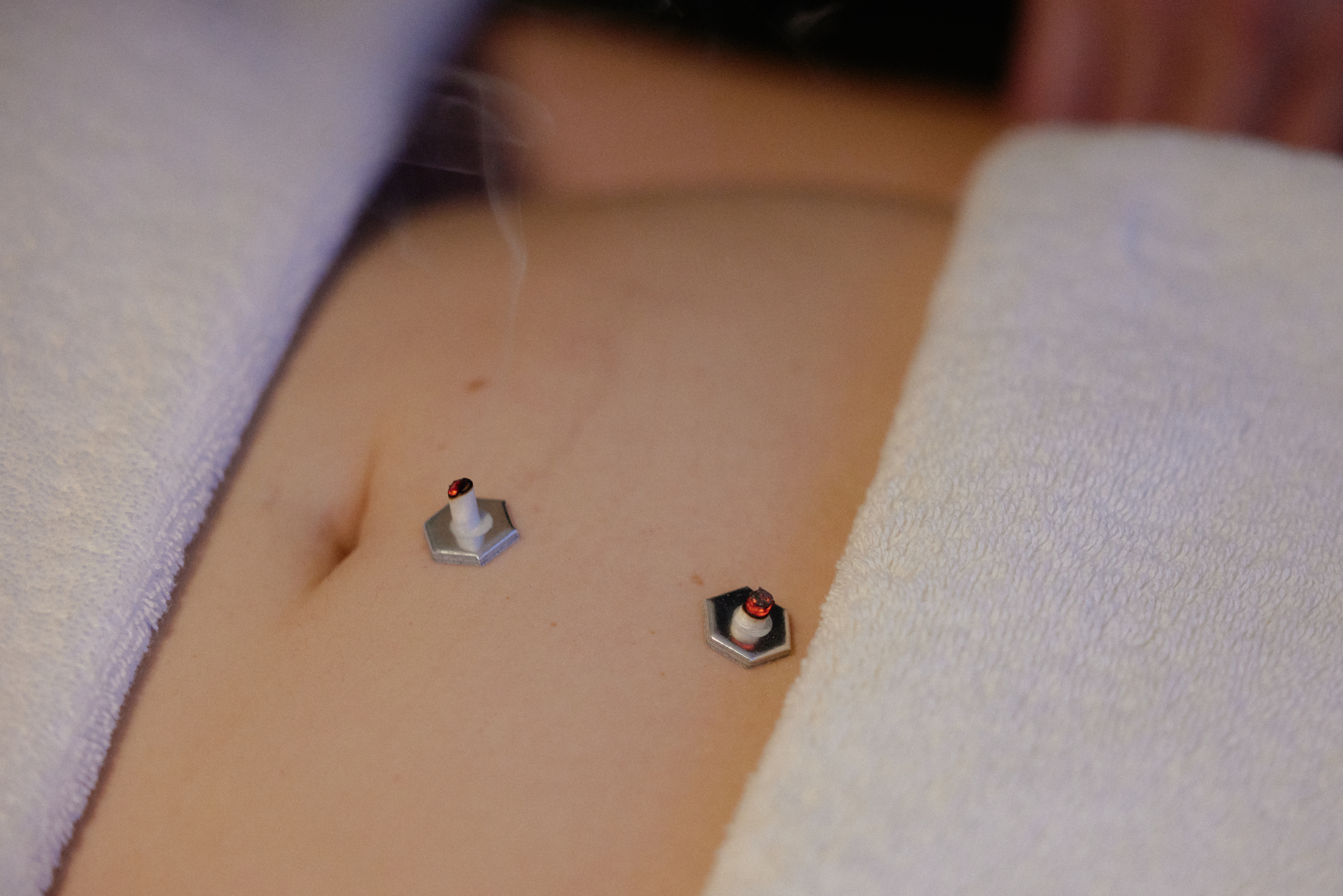
Moxa (Moxibustion) is a heat therapy traditionally used in TCM to warm and nourish the body, especially the uterus. It involves gently warming the body with the herb Mugwort, known for its ability to penetrate deeply and encourage circulation.
Moxa is particularly helpful when period pain feels:
• Cold
• Tight
• Gripping
• Spasmodic
• Worse in cold weather or after eating cold foods
By warming the lower abdomen, moxa supports the body in releasing tension, improving movement of Qi and Blood, and creating a sense of soft comfort through the pelvis.
What You Can Expect Over Time
With consistent acupuncture, moxa and simple lifestyle guidance, many people experience meaningful improvements in their cycle:
-
Less cramping
-
Fewer or smaller clots
-
Reduced bloating
-
A lighter, more regular flow
-
Better moods and emotional stability
-
Improved energy leading up to their period
Rather than treating symptoms at the last minute each month, TCM works with your body throughout the cycle to create long-lasting change.
If You’re Ready for Softer, More Balanced Cycles
If period pain is disrupting your daily life, your sleep, your work, or your sense of wellbeing, know that support is available. TCM offers gentle, holistic tools to help your body find balance and ease.
If you have any further questions, please don’t hesitate to reach out at aimee@chinesemedicinemelbourne.com.au or you can book an appointment with me here.
By Aimee Mickelburough TCM Practitioner & Acupuncturist at Quiescence Chinese Medicine